


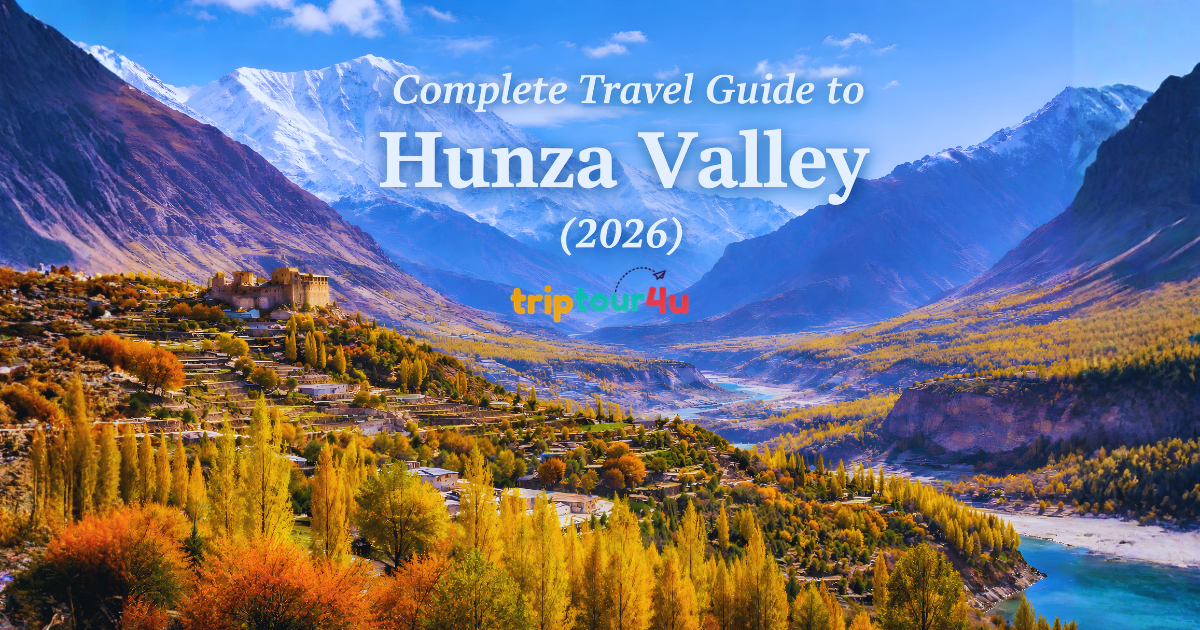
Introduction of Hunza Valley
Travel Guide to Hunza Valley
Hunza Valley, located in the northern mountainous region of Gilgit-Baltistan, is one of Pakistan’s most beautiful and popular travel destinations. Hunza, located in the northern mountainous region of Gilgit-Baltistan, is famous for its stunning landscapes, majestic peaks, rich culture, and peaceful lifestyle.
It is one of Pakistan’s most popular tourist destinations. Tourism in the region will continue to grow through 2026 as better infrastructure, improved road conditions, and increased travel awareness will attract both locals and international tourists.
The valley is located along the historic Karakoram Highway. This highway, which connects Pakistan to China, passes through some of the most stunning landscapes of the Karakoram Region.
Hunza Valley, located in the Karakoram Range, is surrounded by several peaks, including Rakaposhi and Ladyfinger Peak. These peaks form one of the most stunning mountain landscapes on the planet.
Hunza’s natural beauty is matched only by its people, their traditional culture and its rich historical heritage.
Location and Geography of Hunza Valley
Travel Guide to Hunza Valley
Hunza Valley lies in Pakistan’s northernmost region, near the border with China. The valley is located along the Hunza River and is an important part of the mountainous terrain that makes up Gilgit-Baltistan.
Hunza lies approximately 100 km north of Gilgit, and 600 km from Islamabad.
The valley has traditionally been divided into three main regions:
1: Upper Hunza (Gojal)
Upper Hunza, also called Gojal, is located in the northernmost part of Hunza. This includes the villages of Passu, Sost, and other nearby settlements.
The region is known for its dramatic mountain peaks and stunning natural scenery.
2: Central Hunza (Karimabad)
Karimabad, the cultural and tourist center of the valley, is located here. The best hotels, restaurants, and tourist attractions are all within easy reach.
3: Lower Hunza
Lower Hunza is the area around the Hunza River and the Nagar Valley.
Hunza is one of the most beautiful regions in Pakistan due to its diverse geography.
History and Geography of Hunza Valley
Travel Guide to Hunza Valley
Hunza Valley has a rich history dating back hundreds of years. The region was ruled for centuries by local kings called the Mirs of Hunza.
From the famed Baltit Fort, the rulers of the valley ruled. The fort was the administrative and royal center of the Hunza state.
Hunza played a significant role in the ancient Silk Road network. The valley was a frequent stop for traders traveling between Central Asia and China, as well as between Central Asia and South Asia.
Zulfikar Bhutto introduced political reforms in 1974 that officially ended the princely state. Hunza became part of Pakistan in 1974 and has since developed rapidly as a tourist destination.
The Best Time to Visit Hunza Valley 2026
Hunza Valley is open year-round, but each season offers a unique travel experience.
1: Spring (March – May)
Hunza’s spring is a beautiful season. Apricot, almond, and cherry trees bloom in the valley during this period. Altit, for example, is covered with pink and white flowers.
The spring season is perfect for sightseeing and photography. Spring festivals, cultural events, and the pleasant weather are all part of this.
2: Summer (June – August)
Hunza’s peak tourist season is summer. Temperatures range from 15 °C to 28 °C.
Outdoor activities such as trekking, hiking, camping, and glacier exploration are available to travelers.
3: Autumn (September – November)
Autumn transforms Hunza into a golden paradise. The trees turn orange, yellow and red, creating one of Pakistan’s most colorful landscapes.
Eagle’s Nest Hunza offers panoramic views of the valley.
4: Winter (December – February)
Hunza Valley is awash with snow during winter. Snow-covered roads can make travel difficult, but the magical winter landscapes are worth it.
Winter tourism is slowly growing in Hunza as more travelers seek peaceful, snowy mountain destinations.
Top Tourist Attractions of Hunza Valley
The Hunza Valley has many natural and historical attractions.
1: Baltit Fort
Baltit Fort is one of the most famous landmarks in this region. The fort was built more than 700 years ago and was once the home of the Hunza rulers.
The building is a strong example of Tibetan architecture and was constructed using wood, stone, and mud bricks. The Baltit Fort is now a museum after being restored.
The museum’s exhibits and royal rooms tell the history of Hunza.
2: Attabad Lake
Attabad Lake, one of Pakistan’s most popular lakes, is located in the north. The lake formed in 2010, after a massive landslide blocked the Hunza River.
Attabad Lake is one of the most popular tourist destinations in Hunza. Visitors can take part in a variety of activities, including:
- –Boating
- –-Jet skiing
- –Kayaking
- –Lakeside photography
The turquoise water and towering mountains create a stunning landscape in this country.
3: Passu Cones
The Passu Cones are among the most recognisable mountains in the Karakoram. These sharp, pyramid-shaped peaks rise dramatically over the village of Passu.
Due to their unique shape, the cones are sometimes called Cathedral Ridge. Photographers visit this site to capture the stunning mountain scenery.
The impressive Passu Glacier and suspension bridges across the Hunza River are nearby attractions.
4: Altit Fort
Altit Fort, which is older than Baltit Fort, is one of the oldest monuments within the region.
Fort Hunza is located on a cliff that overlooks the Hunza River. It offers spectacular views over the valley. Altit village, which surrounds the fort, is famous for its narrow streets and traditional houses.
Adventure Activities in Hunza Valley
Hunza also ranks among the top adventure tourism destinations in Pakistan.
Popular activities include:
1: Trekking
Hunza has several hiking routes that lead to high mountain passes, glaciers and alpine lakes. The views from the treks in this area are some of the best in the Karakoram.
2: Hiking
Visitors can enjoy scenic views and tranquil mountain landscapes while exploring the valley on short hiking trails in Karimabad.
3: Camping
For adventure seekers, camping near glaciers, lakes, or mountain peaks offers a unique experience.
4: Photography
Hunza, Pakistan, is one of the most beautiful places to visit. Photographers will find many opportunities in Hunza, from golden autumn forests to the snow-covered peaks.
Hunza Culture and Traditions
Hunza is known for its hospitality, friendship, and community values. The majority of residents are Ismaili Muslims under the spiritual leadership of Aga Khan IV.
Hunza has a high literacy rate and focuses on education and social progress.
The local languages of the valley include:
- –Burushaski
- –Wakhi
- –Shina
- –Urdu
Traditional festivals also influence local culture. The Ginani Festival, which marks the beginning of wheat harvest season, is one of the most popular events.
Traditional Hunza Food
Hunza food is organic, simple and nutritious. Local dishes are prepared with fresh vegetables, grains and dried fruit.
Popular foods include:
- –Chapshuro – traditional meat-filled bread
- –-Diram fitti, sweet bread cooked in apricot oil
- –Hunza soup – healthy vegetable soup
- –Apricot jam is a famous local product
The valley’s dried apricots and almonds are also well-known.
Hotels and Accommodations in Hunza
The growth of tourism in the region has led to the development of many new hotels, guesthouses, and resorts.
Some of the most popular places to stay are:
- –Serena Hunza
- –Eagle Nest Hotel Hunza
- –Hunza Darbar Hotel
Many hotels offer balconies with stunning views of the Karakoram Mountains.
Travel Tips for Visiting Hunza Valley
These tips will make your trip to Hunza Valley in 2026 a pleasant one:
- –Even in summer, it is important to wear warm clothing because the nights can still be cold.
- –Book early for peak season hotels.
- –Respect the local customs and traditions.
- –Carry cash, as ATMs may not always work in remote areas.
- –Be careful when traveling during the winter months due to snowfall.
Hunza Valley should be on your 2026 travel list.
Hunza Valley is a unique combination of natural beauty, cultural riches, and adventure opportunities. The experience of exploring ancient forts, boating on turquoise lakes, hiking along mountain trails, or eating traditional Hunza food is unforgettable.
The Hunza Valley will remain one of Pakistan’s top travel destinations after 2026, thanks to improvements in tourism infrastructure and global recognition.
Hunza Valley should be on every traveler’s bucket list for peace, adventure, and stunning scenery.
Sustainable Tourism and the Future of Hunza Valley
Travel Guide to Hunza Valley
The tourism industry in Hunza Valley is booming, and sustainable tourism has become a major topic of discussion for the future. Local communities, tourism authorities, and environmental groups are working together to preserve the natural beauty of Hunza, while welcoming tourists from around the globe.
Efforts are being made to encourage eco-friendly travel, reduce plastic waste, and promote responsible tourism. Visitors are encouraged to support local communities and businesses, respect the environment and avoid littering. Travelers can preserve the Hunza Valley’s beautiful landscapes, culture and natural heritage by practicing responsible tourism.
The Hunza Valley in Pakistan will remain a popular travel destination for many years.